RC Plane Build
The Goal
The goal of this project was to scratch-build a fully functional remote-controlled airplane. Having previously constructed upcycled gliders, I wanted to advance to a motorized, radio-controlled system. Instead of purchasing a pre-made plastic shell, I sourced structural foam blueprints online, studied aerospace fabrication techniques via YouTube, and built the physical airframe entirely from scratch.
Construction Features
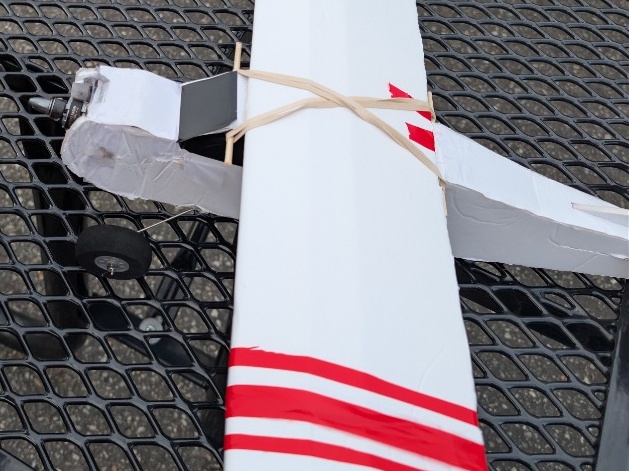
- Airframe Fabrication: I constructed the main fuselage and wings using raw, lightweight foam board. I carefully cut, folded, and glued the flat materials based on digital schematics to create a rigid, aerodynamic 3D structure capable of generating lift.
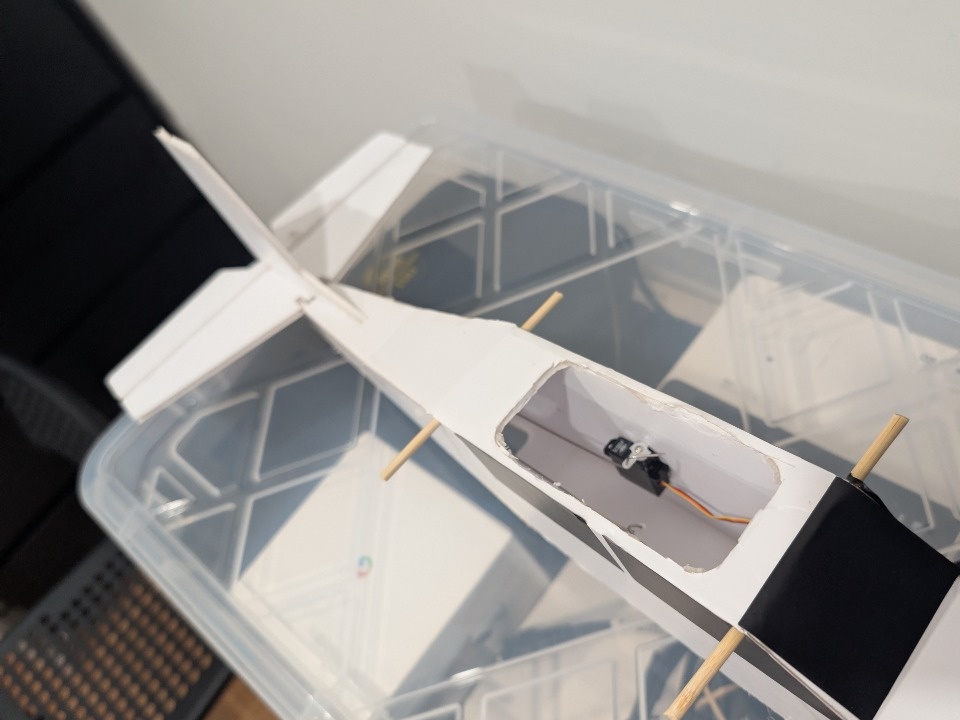
- Mechanical Linkages: To control the plane’s pitch and yaw in the air, I engineered a custom pushrod system. I routed a network of wires and strings through the foam chassis to connect the onboard servos to the tail’s elevator and rudder.
- Propulsion Integration: I installed a brushless motor and an electronic speed controller at the nose, configuring the receiver to bind with my handheld transmitter for throttle control.
Problems and Solutions
Propeller Fractures
Problem: During my initial test flights, the plane experienced several hard landings. The impact forces repeatedly snapped the standard propellers I was using, completely grounding the aircraft and halting my testing process.
Solution: I researched more durable, flexible propeller alternatives and independently sourced a bulk supply of replacements from Amazon. This allowed me to rapidly swap out broken parts in the field, adapt to the crashes, and continuously refine my piloting skills without delays.
Linkage Tension and Play
Problem: When I first assembled the control surfaces, the wires and strings had too much slack. This caused a mechanical delay between the stick movements on my controller and the actual movement of the rudder, making the plane highly unstable in the air.
Solution: I manually re-routed the strings, tightened the wire pushrods at the servo horns, and secured them with custom guides along the fuselage. This eliminated the dead zone and provided immediate, crisp control over the aircraft’s trajectory.
Center of Gravity Imbalance
Problem: Because the foam airframe was scratch-built, the initial weight distribution was slightly tail-heavy. When I attempted the first launch, the plane immediately pitched upward and stalled.
Solution: I recalculated the required center of gravity based on the wing chord. I then carved out a new compartment further up the nose to shift the heavy lithium-polymer battery forward, perfectly balancing the aircraft for stable flight.
Control Surface Warps
Problem: After multiple crashes, my elevator and rudder warped and caused the plane to do an uncontrollable roll.
Solution: I rebuilt the entire back portion of the plane, which caused me to redo the entire servo linkage to restore stable flight mechanics.
Skills Demonstrated
Gallery